Most comprehensive guide, created for all Web Scraping developers.
Scrapeless offers AI-powered, robust, and scalable web scraping and automation services trusted by leading enterprises. Our enterprise-grade solutions are tailored to meet your project needs, with dedicated technical support throughout. With a strong technical team and flexible delivery times, we charge only for successful data, enabling efficient data extraction while bypassing limitations.
Contact us now to fuel your business growth.
Provide your contact details, and we'll promptly reach out to offer a product demo and introduction. We ensure your information remains confidential, complying with GDPR standards.
Your free trial is ready! Sign up for a Scrapeless account for free, and your trial will be instantly activated in your account.
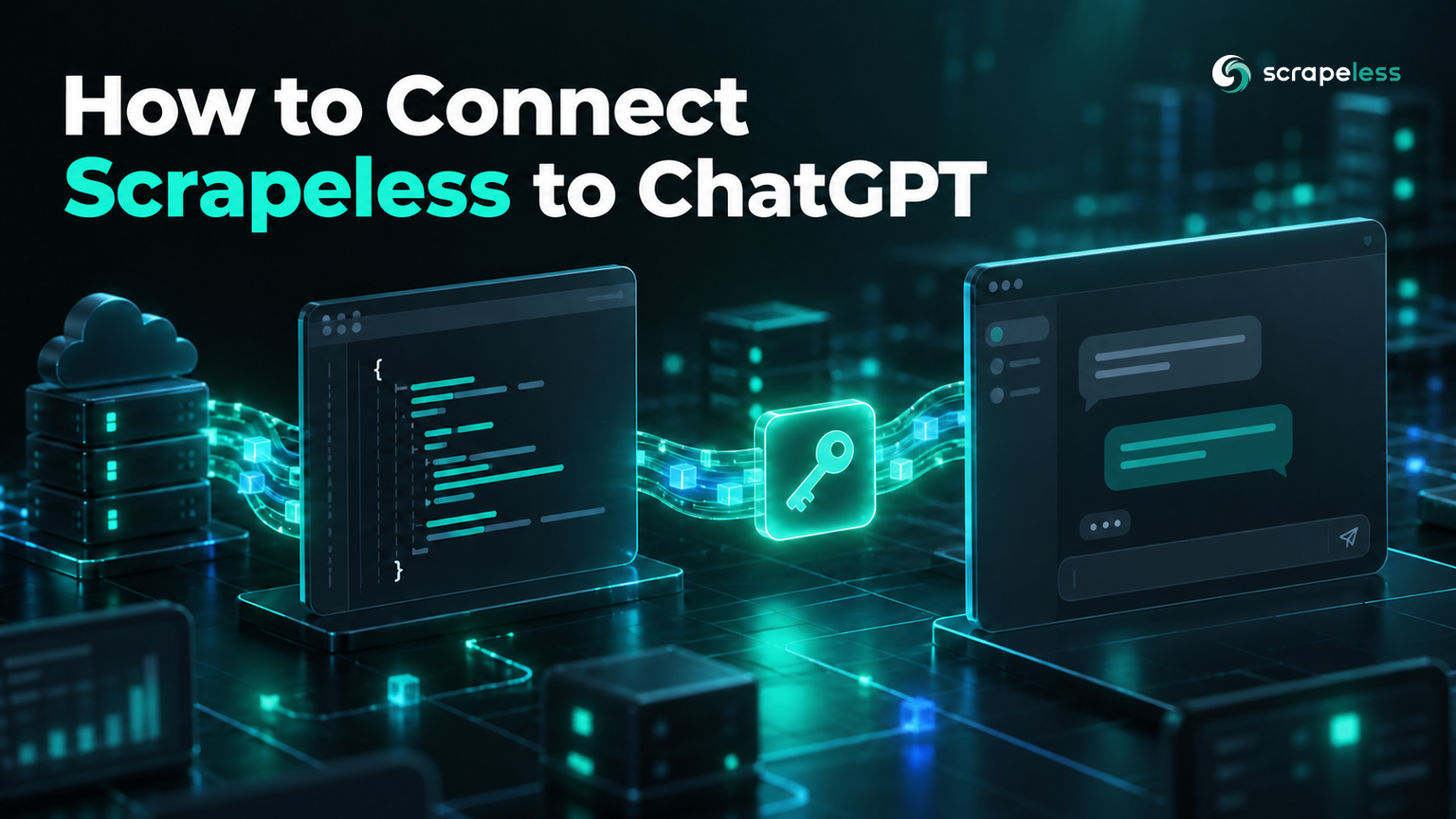
This post walks through using the **Scrapeless MCP Server** with any **MCP-aware client** — Claude Desktop, Claude Code, Cursor, OpenAI Codex CLI, Gemini CLI, or a custom client built against the [MCP TypeScript SDK](https://github.com/modelcontextprotocol/typescript-sdk) — to scrape Google Maps end to end. The server wraps **Scrapeless Scraping Browser** — an agent-ready cloud browser — as a set of MCP tools, so the agent calls `browser_create` / `browser_goto` / `browser_scroll` / `browser_get_html` directly through the protocol rather than shelling out to a CLI or wiring up an SDK. The cloud browser handles the rendering, the proxies, and the anti-detection layer; the agent handles the discover → extract pattern.

This post walks through a terminal-first workflow on top of Scrapeless Scraping Browser — an agent-ready cloud browser that handles JavaScript rendering, residential-proxy egress, and session-bound state for per-store stock checks. Steps 1–8 below cover the full PDP extraction (JSON-LD fast path + hydrated fields), search/category pagination, the location-selector flow that unlocks store-specific availability, and the review pipeline (top-10 from JSON-LD plus rendered-DOM pagination, sort, and filter).

Scrapeless Amazon Rufus Scraper API removes the hardest parts of working with Rufus. Instead of managing Amazon login sessions, SSE parsing, anti-bot challenges, and marketplace routing yourself, you send one request and get structured output back. That makes it a practical choice for production pipelines that need reliable, scalable access to Rufus-generated shopping intelligence.

This post is a CLI-first, verification-grounded walkthrough through the `scrapeless-scraping-browser` cloud browser. Every selector, wait threshold, and failure pattern below is backed by an Ubuntu verification run on 2026-04-24 — Google-specific claims for organic extraction, pagination, localization, classic-SERP suppression, AI Overview polling, Knowledge Panel, PAA, and Related Searches.

This guide walks through a terminal-first workflow on top of Scrapeless Agent Browser that handles the parts that normally eat weeks: anti-detection fingerprinting, residential proxies, dynamic rendering, and cross-marketplace locale consistency — all through a single `scrapeless-scraping-browser` CLI.

This guide shows how to install the Scrapeless Scraping Browser skill into 5 major agent environments, while keeping the same underlying browser foundation across all of them.

This comprehensive guide delves into the 5 best Amazon scrapers in 2026, offering an in-depth comparison to help you choose the perfect tool for your specific needs. We'll explore their core features, evaluate their strengths and weaknesses, and provide insights into their pricing models. We'll also highlight how Scrapeless, with its advanced capabilities like the Web Unlocker and specialized data extraction for Sponsor Ads and Rufus data, stands out in this competitive landscape.

This guide walks through a single TypeScript file built on Scrapeless Scraping Browser that handles every hard part up front: the anti-detection cloud browser, the residential proxies, the per-product enrichment with reviews and shop metadata and the multi-query expansion technique that surfaces far more results from a single base keyword than Etsy's per-search ceiling normally allows. The same scraper supports four independent discovery modes — feed it a product URL, a category URL, a keyword search or a shop URL — and every output row carries the same rich 30-field schema regardless of how the listing was discovered.